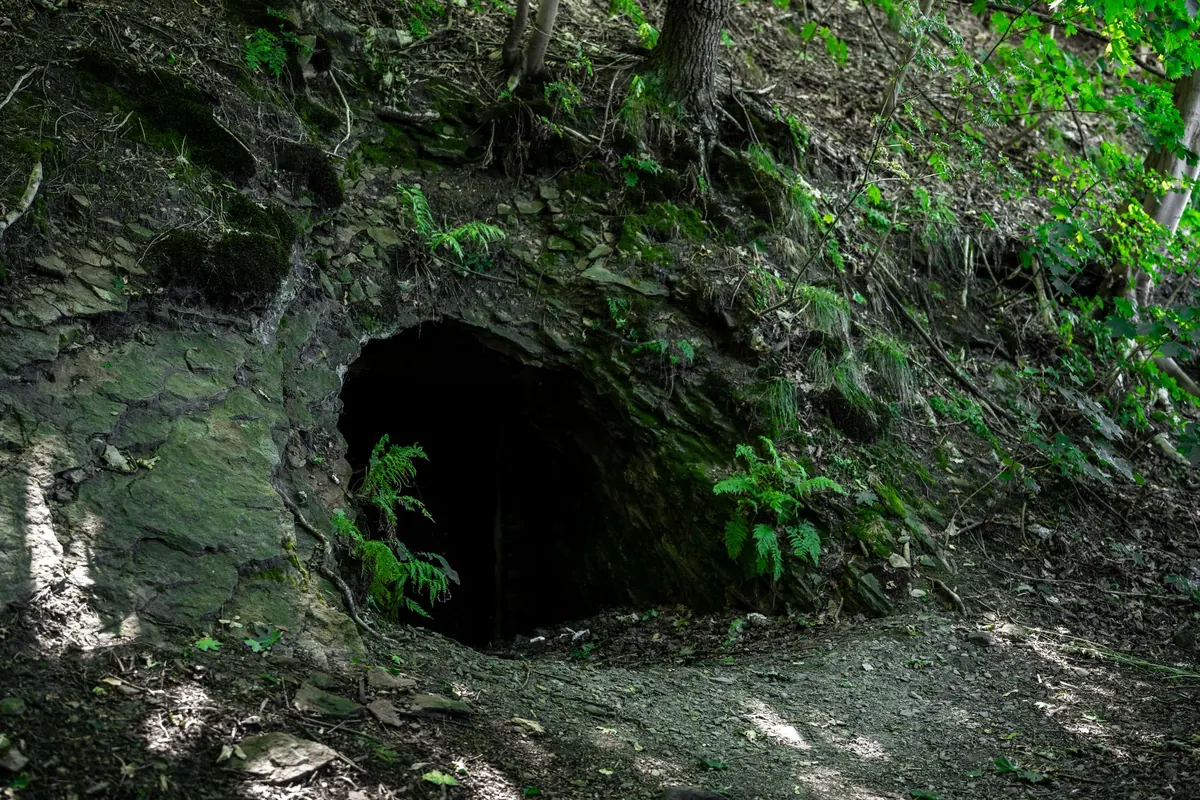
Two holes in a bank, a fan of fresh soil and a path worn bare through the grass. It could be a badger sett, it could be a fox earth — and in poor light the two are easy to muddle. Both animals are nocturnal, both dig, and both pick similar spots: well-drained banks, woodland edges, hedgerows, the quiet corner of a field. The differences come down to details you can read in a couple of minutes — the size and shape of the entrance, what has been dug out and carried in, the smell, and the trails leading up to it.
Start with the entrance
A badger hole is big. Picture a dinner plate stood on its edge: roughly 25–30cm across and 20–25cm high. The classic shape is a rounded arch with a flatter base, worn smooth by generations of broad bodies squeezing through. You will usually see a shallow ramp of polished soil leading down into the dark, and a clear run-up through the vegetation.
A fox earth is smaller — closer to 15–20cm across — and rounder in outline. Foxes often enlarge an existing rabbit burrow rather than excavating from scratch, so the entrance can look like a rabbit hole that has had a growth spurt, sometimes halfway up a slope and often half-hidden by brambles or ivy.
Then count the holes. Badgers are social, and an active sett usually has several entrances dotted along a bank, connected underground. A fox earth is typically one or two holes in use at a time, and a vixen with cubs will often settle on a single natal den in spring.
Look at the spoil heap and what's been carried in
Both animals push soil out of the entrance, but badgers do it with enthusiasm. The spoil heap outside a sett entrance is often broad, fan-shaped and unmistakably fresh, with stones and lumps of root mixed through it. Because setts are dug over and cleaned out regularly, you'll find new soil sitting above old.
The strongest badger clue is bedding. Badgers line their sleeping chamber with dried grass, bracken, leaves or bluebell stems, and they drag it in in bundles. Look for wisps of bedding just outside the entrance, or piled where it has been aired in the sun. That single detail is hard to mistake for anything else.
Fox earths give themselves away differently, with prey. Feathers, bird legs, bones, eggshell, fur and the occasional hedgehog spine collect around the den mouth, especially when cubs are being fed in late spring and summer. The spoil heap tends to be smaller and messier — a scatter rather than a fan.
Use your nose
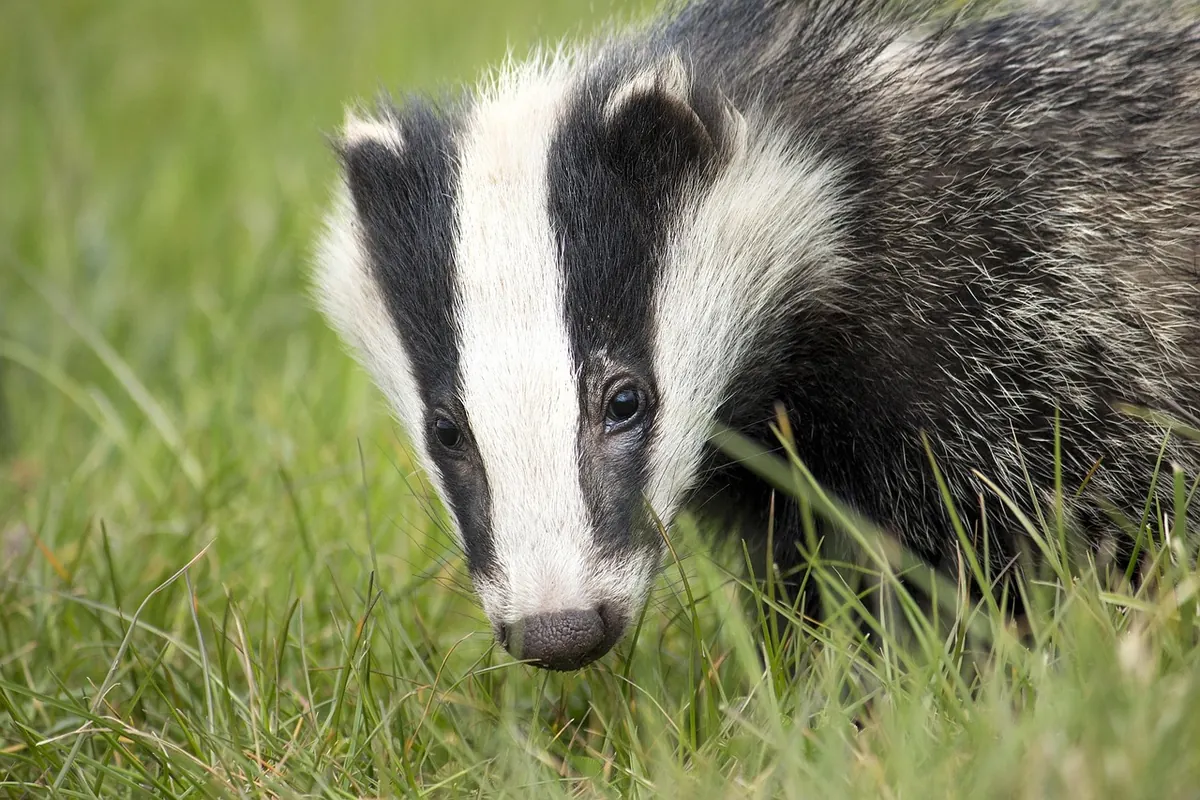
Badger setts smell earthy and musky, like damp soil with a faint whiff of ammonia. Badgers keep their living quarters clean and dung in latrines away from the sett, so the smell rarely stops you in your tracks.
A fox earth is a different experience. Foxes scent-mark constantly, and the sharp, pungent, ammonia-heavy smell of urine and scat is noticeable from several metres away. If you find yourself stepping back and wrinkling your nose, fox is the better bet.
Read the signs around it
The surrounding ground usually settles the argument, so look wider rather than peering into the hole.
- Latrines. Badgers dig shallow scraped pits, often at regular points along a path near the sett, and dung in them. Several pits in a row is a strong badger indicator.
- Scats. Fox scats are left in the open — on top of a stone, a tussock or a path — and are dark, twisted and often full of hair, bone or fruit pips. Foxes use them as calling cards, so they are meant to be seen.
- Paths. Badger runs are wide, well-worn and often sunken, threading between hedges and fields. Fox paths are narrower and less pronounced.
- Snuffle holes. Small conical pits in grass or woodland floor, where badgers have rooted for worms and beetle larvae. A pasture full of them is a good sign of badgers nearby.
- Tracks. In mud, badger prints show five toes and a broad, kidney-shaped pad, usually with claws. Fox prints show four toes, narrower and dog-like, with visible claw marks, often travelling in a fairly straight line.
- Hair. Coarse black-and-white banded hairs snagged on wire fencing point to badgers. Softer, reddish-brown hair points to fox.
A quick side-by-side comparison
- Badger: entrance 25–30cm, D-shaped with a flat base; large fan of fresh spoil; bedding outside; latrines in scraped pits; five-toed prints.
- Fox: entrance 15–20cm, rounder; smaller, untidier spoil; feathers, bones and prey remains; scats on prominent objects; four-toed prints with claws.
- Rabbit: neat holes 10–15cm across, often many together in a warren, with closely cropped grass and droppings nearby. Remember that both foxes and badgers will happily move into an old warren, so size alone is not the whole story.
Watching without disturbing
Once you have a likely sett or earth, the best way to confirm it is from a distance. Arrive an hour before dusk, stay 20–30 metres back, and keep downwind so your scent doesn't carry. A torch with a red filter is far less alarming to wildlife than a white beam, and a trail camera left for three or four nights will often give you a clear answer without you being there at all.
Keep dogs on a lead, don't block or widen entrances, never dig into a tunnel, and don't leave food out — it pulls animals towards roads and gardens where they come to harm. Badger setts are legally protected in the UK, and it is an offence to intentionally or recklessly damage, destroy or obstruct a sett, or to disturb a badger using one. If you're planning fencing, tree work, drainage or building anywhere near a sett, stop and take advice from the relevant nature conservation body before you start.
Photo: alexandreatleta1 / Pixabay