How to Identify Badger Field Signs in Woodland
A badger wood is a quiet puzzle. Badgers are nocturnal, wary and extremely good at not being seen, so a straightforward sighting is never guaranteed. Field signs are how you get to know them instead: the earthworks, tracks, droppings and stray hairs that reveal where a clan lives, how it travels and what it has been eating. Read the ground carefully and you can build a detailed picture of a sett and its occupants, all without getting close to the animals themselves.
Begin with the sett
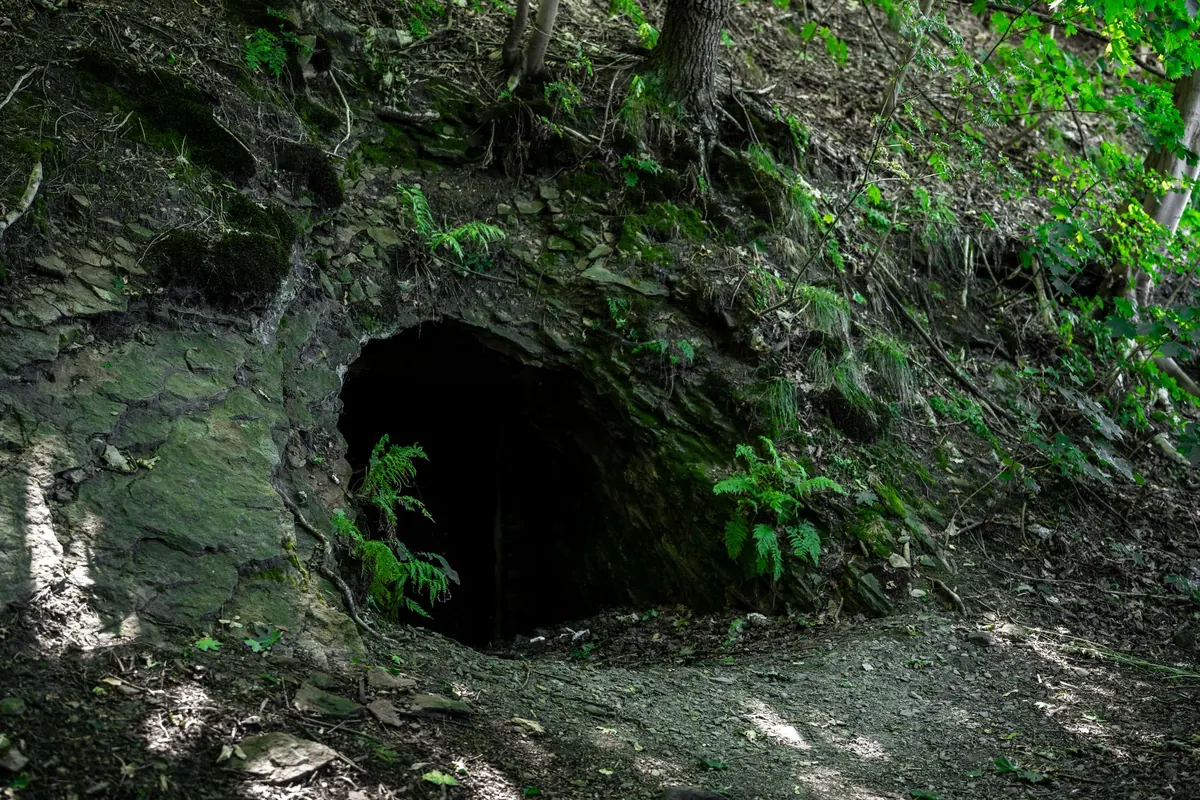
A sett is far more than a hole in a bank. A main sett is a sprawling network of tunnels with several entrances — sometimes a dozen or more — usually dug into a slope or bank in well-drained ground. Look for them near woodland edges, along hedgerows and on the fringes of pasture where digging is easy and worms are plentiful.
Not every sett is the same. Badger setts are usually classified as main, annex, subsidiary or outlying. A main sett is the clan’s headquarters, occupied year-round and often generation after generation. It has the largest number of entrances, the biggest spoil heaps and the most obvious network of worn paths. An annex sett is close to the main sett — often within a few dozen metres — and may be connected underground or used as an overflow. A subsidiary sett is smaller, with fewer entrances, and may be used intermittently. An outlying sett is usually just one or two holes, often temporary, and may be dug by a badger looking for a quiet place to sleep or a new territory. Knowing these differences stops you from mistaking a single old hole for the heart of a clan.
Reading an entrance
The classic badger entrance is wider than it is tall, with a flattened top and a smooth, polished lip where generations of animals have squeezed through. Rabbit holes are round and much smaller. A fox earth can be a similar size, but fox holes tend to be rounder and often have bones, feathers or a sharp smell around them. Badgers leave bedding instead — dry grass, bracken and leaves, sometimes dragged out to air and left caught on the brambles and low branches near the entrance.
Measure if you can. A badger entrance is often about 20–30 cm across, shaped like a flattened oval or a letter D. A rabbit hole is usually only 10–15 cm across and neatly round. A fox earth may be close to a badger’s in size, but it is more circular, and the surrounding soil often contains prey remains rather than bedding.
- Badger: wide, D-shaped or flattened oval, with a smooth, polished lip and loose soil scattered outside.
- Rabbit: small, round, usually 10–15 cm across, often with neat nibbled vegetation nearby.
- Fox: similar size to a badger hole but rounder, often with bones, feathers, fur or a sharp, rank smell.
Freshness matters as much as shape. A sett entrance with damp, dark soil, clear claw marks and a few flies is likely active. One with cobwebs across the mouth, leaves settled inside and moss creeping over the lip is probably disused — at least for now. Badgers often use several entrances in rotation, so a single inactive hole does not mean the whole sett is empty.
Spotting fresh activity
Look for signs of recent housekeeping. Badgers drag out old bedding to air, so you may find dry grass, bracken, bluebell stems or leaves caught on brambles near an entrance. Fresh digging leaves a fan of loose soil, sometimes with stones pushed aside. Footprints in the spoil are gold dust. A badger’s front foot has five toes, a broad kidney-shaped pad and long, strong claws that often register clearly. A fox print is narrower, with four toes and less prominent claws. If the ground is hard, wait for rain; muddy entrances become a record book of overnight visitors.
Tracks, trails and runs
Badgers are creatures of habit, and their paths show it. A well-used run is a narrow, flattened highway through grass, bracken or bluebells, often with a low tunnel shape where animals have pushed through repeatedly. Runs connect the sett to feeding grounds, latrines, water sources and neighbouring territories. In woodland, they may pass under fallen logs, through gaps in hedges or along the base of a fence. Because badgers use the same routes for years, some runs become deep, bare and unmistakable.
Follow a run quietly and you may find hair caught on barbed wire, mud smeared on a low branch or claw marks on a fence post. These small clues confirm that the path is not just a deer trail. Deer tracks are cloven; badger tracks show five toes and a wide pad. Dog tracks are similar in shape but usually larger and more variable, and dogs rarely follow the same narrow route with such discipline. A network of runs converging on a bank is a strong hint that a sett lies nearby.
Footprints in mud and snow
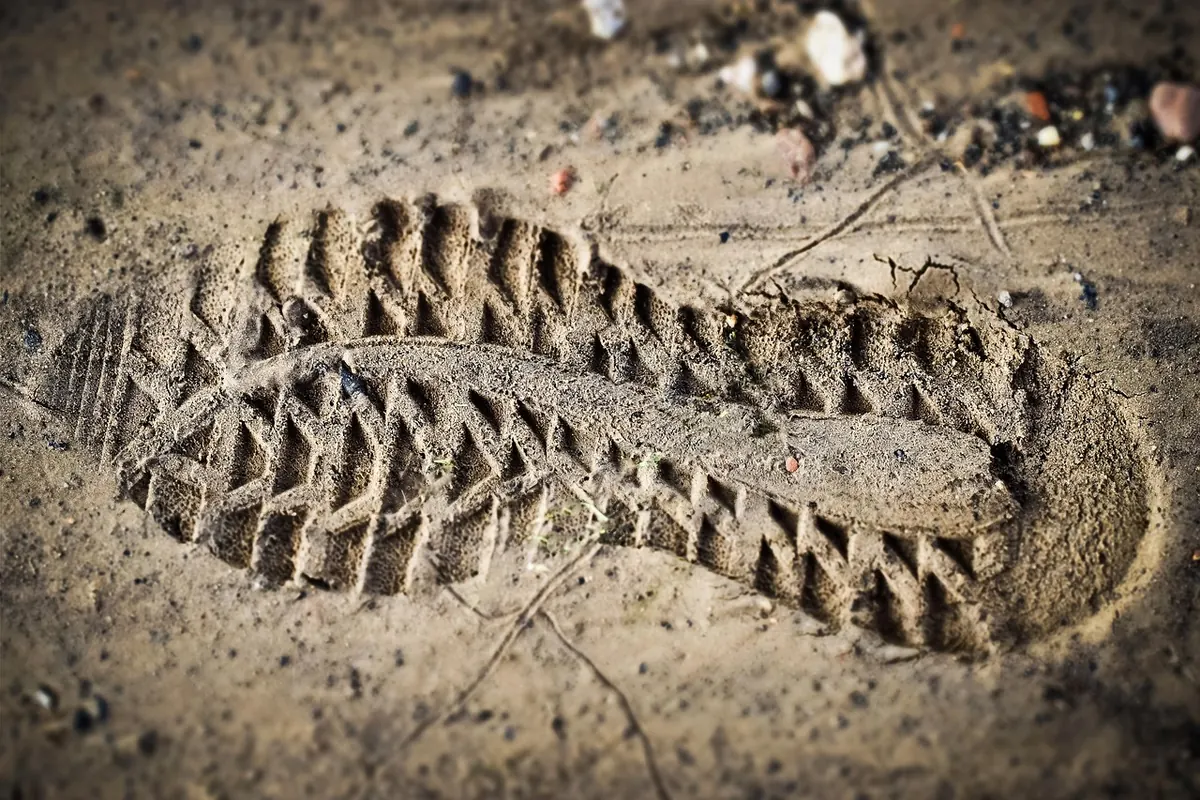
Mud and snow turn a badger wood into a storyboard. In snow, look for a low, direct trail with a distinctive broad print. Badgers often place their feet almost in line, giving a purposeful, straight walk rather than the meandering pattern of a fox. In mud, the front print may show long claws above each toe. Hind prints are narrower and sometimes look almost like a small bear’s. If you are unsure, sketch the print and note the stride. A badger’s stride is usually shorter than a dog’s and more regular.
Droppings, latrines and scent
Badgers do not scatter their droppings randomly. They use shallow scrapes called latrines, often placed at territory boundaries, beside runs, near sett entrances or along field edges. A latrine is a communal toilet: several droppings in one small area, sometimes with scratched soil around them. The droppings themselves are dark, cylindrical and blunt-ended, often segmented and slightly shiny when fresh. They may contain worm skins, beetle wing cases, seeds, fruit pips or insect remains. Colour varies with diet: black and tarry after a night of worms, purple or red after berries, and brown when nuts and seeds are on the menu.
Fox scat can look similar at a glance, but it is usually twisted, tapering and full of hair, bones and feathers, and it is often left in a prominent place such as a stone or path. Badger droppings are more likely to be in a scrape, and the smell is musky rather than sharply foul. Never handle droppings with bare hands. Use a stick to move them, and wash your hands afterwards.
What droppings reveal about diet
Reading droppings is a form of detective work. In spring, you may find remains of beetles, earthworms, small mammals, birds’ eggs and nestlings. In summer, badgers switch to berries, cherries, plums and insects. In autumn, they feast on acorns, beech mast, hazelnuts, blackberries and fallen apples. In winter, worms and roots become important again, and carrion may be eaten if available. A latrine full of
Photo: 652234 / Pixabay