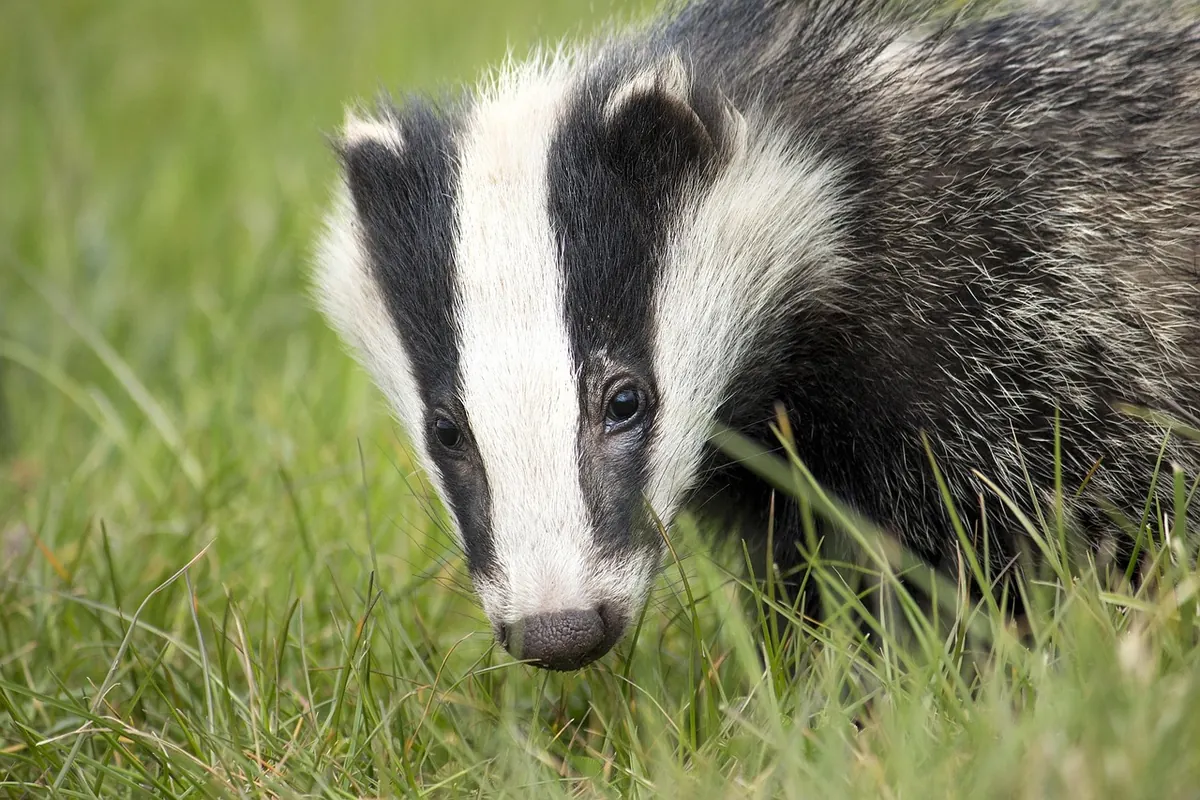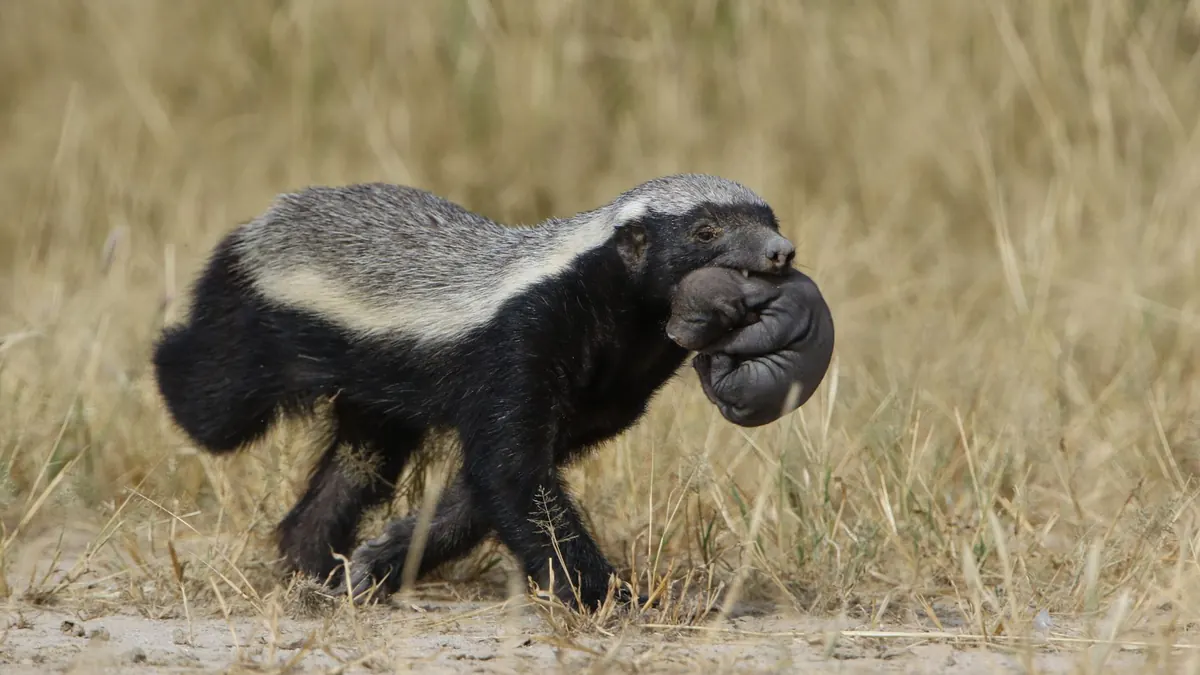
A badger at dusk, nose to the ground, working along a field edge, looks like a straightforward animal doing something straightforward. Then you learn that its sett may be older than the farmhouse, and that the animal has a third eyelid for digging and poor eyesight in a world it mostly smells. Here are ten things about UK badgers that tend to surprise people.
They Are Earthworm Specialists First
Ask most people what a badger eats and you will get "anything it finds". In Britain, badgers are worm specialists. On good pasture, one can spend most of a night working the grass, nose almost touching the ground, hoovering up earthworms rather than digging for them one at a time. The evidence turns up in your lawn: small, neat, conical holes in the turf, often in clusters, sometimes with the grass looking brushed. Those are snuffle holes, one of the most reliable signs that badgers are about.
Worms are not available on the same terms all year. In dry summer weather they retreat deeper into the soil; in hard frost they are out of reach. So the menu shifts:
- Beetles, chafers and grubs, especially in late spring and summer
- Slugs and snails, taken without much fuss
- Wasp and bumblebee nests, dug out for the larvae
- Fallen fruit — apples, plums, blackberries — in autumn
- Carrion, eggs, nestlings, small mammals and amphibians when the chance arises
If you feed badgers, unsalted peanuts and a little fruit beat bread and milk, which they cannot digest properly. Check with a local badger group first, too, because feeding stations can pull badgers towards roads.
Their Noses Run the Show
Badgers have poor eyesight. They register shapes, movement and light levels, but they are short-sighted and see the world in muted tones. For an animal of hedgerows and darkness that is less of a handicap than it sounds, because smell does most of the work. The snuffling you hear along a hedge is a badger reading the ground.
Smell is also how clan members recognise each other. Every badger carries a scent from a gland beneath the tail, and the shared smell marks the group, the sett and the territory. There is one more piece of engineering worth knowing: a nictitating membrane, a third eyelid that sweeps across to protect the eye while the animal roots in soil.
To watch badgers, work with the nose rather than against it. Approach from downwind, avoid strong scents — washing powder, insect repellent, tobacco — and be in position before dusk.
Clans, Setts and a Boundary Made of Scent
Badgers live in social groups called clans: usually a handful of adults, often closely related females, plus that year's cubs. Young males are the ones most likely to move on. Clan size varies with habitat, from two or three animals to much larger groups on worm-rich farmland.
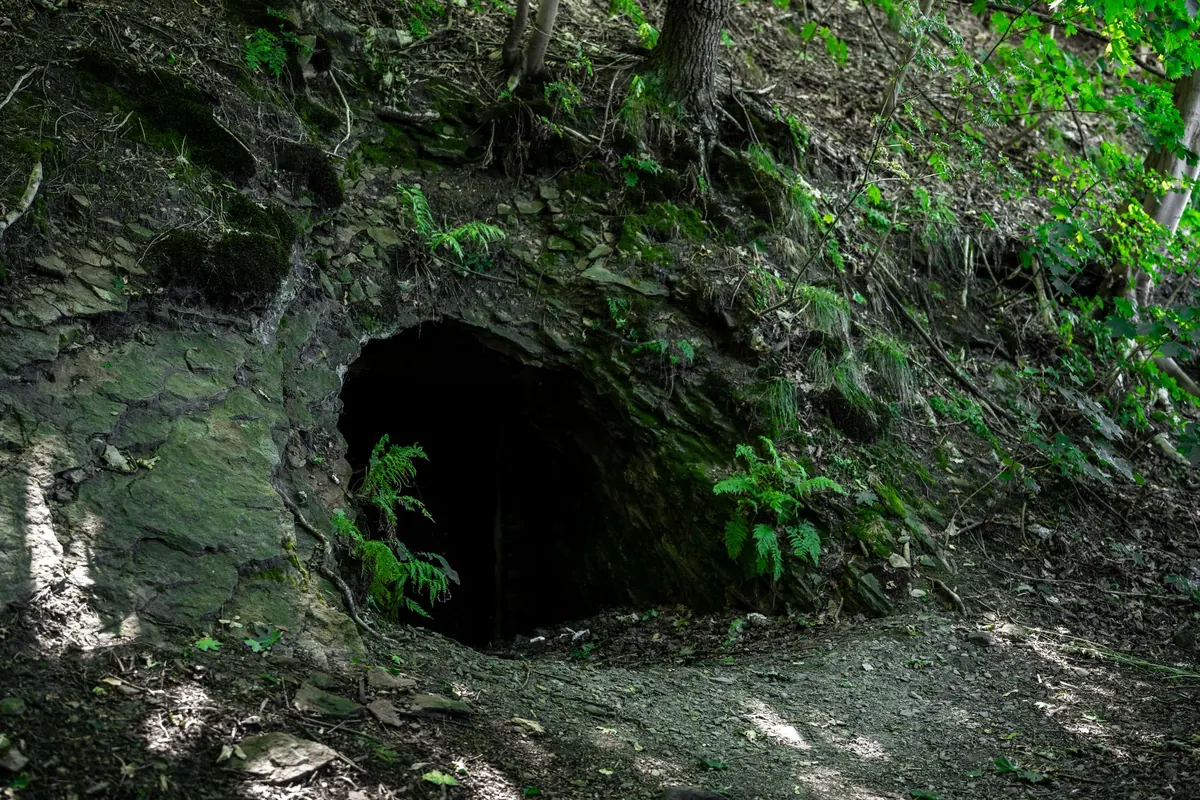
A main sett is the long-term home — tunnels, chambers and several entrances, often with large spoil heaps of excavated soil outside. Around it sit annexe setts, subsidiary setts and small outlier holes. Some main setts have been occupied for decades or longer. Look for worn paths between entrances, and for bedding — dry grass, bracken, leaves — dragged in and sometimes left outside in fine weather to air.
At the edge of a territory you will often find latrines: shallow pits used repeatedly by the whole clan. They mark the boundary, so they tell you where one group's land ends. Badgers do not hibernate, by the way. In a cold snap they may stay below ground for days, but on mild winter nights they still come out. To judge whether a sett is active, look for fresh digging, tracks and droppings rather than waiting for a sighting.
Cubs Arrive in the Cold for a Reason
Badgers mate mainly in spring and summer. The unusual part comes next: implantation of the fertilised egg is delayed, so development pauses and effectively restarts later, timing births to roughly the same window each year — usually January to March.
That puts the hardest weeks of a cub's life in the leanest season, but it also means cubs are big enough to exploit spring, when the ground softens and worms return near the surface. Litters are small, typically one to three. Cubs stay underground for weeks, first emerge around April or May, and are usually weaned by three or four months old.
Road traffic is a major cause of death for young badgers. A sett with small cubs deserves a wide berth in spring: watch from a distance, keep dogs away, and never linger at entrances.
Protected by Law — and Sett Law Catches People Out
In England, Wales and Scotland, badgers are protected by the Protection of Badgers Act 1992; Northern Ireland has its own legislation. The point that catches people out is that the law protects the animal and its home. You can break it without ever touching a badger.
Broadly, it is an offence to:
- Kill, injure or take a badger, or attempt to
- Cruelly ill-treat a badger
- Dig for a badger
- Damage, destroy or obstruct a badger sett
- Disturb a badger while it is occupying a sett
- Mark or ring a badger without a licence
Some activities can be licensed — certain works affecting setts, for instance — and licences come from Natural England, Natural Resources Wales or NatureScot depending on where you are. The detail varies between nations, so check current guidance rather than relying on memory.
Badgers are also entangled in the long-running debate about bovine TB, and policy on culling and vaccination has changed more than once. Whatever your view, the practical advice is the same: if you have a sett, or a proposal that might affect one, take advice early.
This is general information, not legal advice. For anything involving a sett, a development or an injured badger, contact the relevant statutory body or a local badger group before you act.
Watching Badgers Well: A Short Practical Guide
Badger watching costs nothing but patience. A few things make a real difference.
- Find a sett by day. Look for spoil heaps, worn paths and latrines, and choose a spot on a public footpath or with the landowner's permission.
- Arrive before dusk and get comfortable. Badgers notice anything new, so settle in rather than turning up once they are already out.
- Stay downwind. Your scent is the likeliest thing to send them back underground.
- Keep still and quiet. Sit rather than stand, keep your silhouette low, and leave the rustling waterproof at home.
- If you need light, use a red filter and avoid white beams.
- Never block an entrance, keep away in spring, and leave the dog at home.
- Keep notes and report road casualties to your local badger group — that information is genuinely useful.
No special equipment is needed: an hour of sitting still in the dark, listening for a heavy shuffle in the leaves. If a badger does appear, look at the face stripes. No two are quite alike, and over a season you may learn to recognise individuals from the same clan.
Photo: Derek Keats / Pexels